




GEO and Growth SEO for E-commerce: AI Conversion Architecture
The search engine paradigm is undergoing a radical evolution. Make your brand the number one "citation surface" for AI assistants with Generative Engine Optimization (GEO) and Premium Editorial UX strategies.
Executive Summary: For e-commerce sites, the combination of Growth SEO and GEO (Generative Engine Optimization) is a strategy to transform product pages and categories into semantic data architectures that can be directly referenced by artificial intelligence language models (LLMs) (AI Citation). This approach aims to increase not only traffic but also direct basket volume, revenue influence, and market dominance.
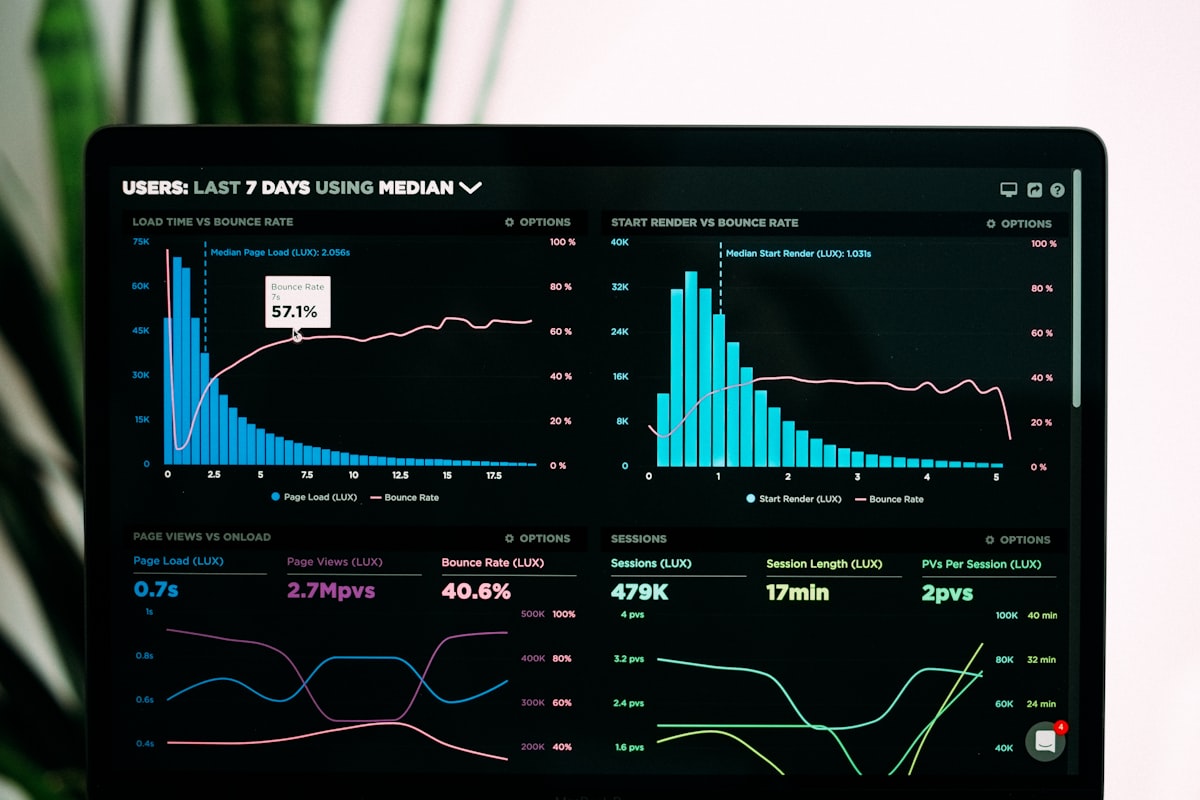
Context: Generous AI assistants evaluate e-commerce site data across billions of parameters. If your product data doesn't have a clear entity structure like the one on this screen, you'll be removed from search results.
1. Redefining Search Habits
Performance marketing teams and e-commerce directors have built their strategies on a linear search funnel for years. A user searches for a product group, lands on a listing page (PLP), filters, and finds the product. However, search engines are now moving beyond simply "listing" products. ""answer engines" It is transforming.
In this new era, simply piling keywords into category texts or running standard backlink campaigns doesn't guarantee visibility. Your brand needs to be a source that generative artificial intelligence finds "accurate, reliable, and purchasable." That's where it all comes in. Generative Engine Optimization (GEO) it takes effect.
2. How does the LLM Retrieval Layer work?
Generative AI doesn't "read" your website like a human does. It translates your content, product descriptions, and diagrams into mathematical vectors and places them into a "Latent Space." This allows search engines to... Retrieval Layer, While searching for an answer to a specific question posed by the user, it scans its own database (RAG - Retrieval-Augmented Generation) for the closest vectors.
For example, when a query like "Top 3 waterproof, lightweight running shoes for rainy weather" comes in, the LLM (Lightweight Locator) combines the entities "lightness," "waterproofness," and "running dynamics." If these features are not clearly, structured (with structured data), and editorially richly presented on your product page, the Retrieval Layer will skip you entirely.
""In the age of AI search, ranking is not a metric, but a natural byproduct of well-structured data.""

Context: In Growth SEO architecture, success is measured by revenue, not page views. A category receiving citations in AI searches means users with high purchase intent are approaching the payment page directly.
3. What is an E-commerce Knowledge Graph?
An e-commerce site's AI visibility is determined by what it possesses. Knowledge Graph It depends on its quality. Knowledge Graph is a massive network that shows how your brand's products, categories, blog content, customer reviews, and brand authority are semantically linked to each other.
If you're selling "camping tents," your Knowledge Graph should tell the algorithm with mathematical precision what wind speeds the tent can withstand, what seasons it can be used in, and which tent bases it's compatible with.
Sectoral Definition: GEO (Generative Engine Optimization)
Generative Engine Optimization, Genetic Agility Modeling (RAG) is the practice of making your web assets compatible with Generative Artificial Intelligence (LLM) processes. In the context of e-commerce, this means ensuring that products, variants, user reviews, and category contexts are perceived by algorithms as clear "semantic entities." The ultimate goal is for your brand to be used as a "Citation Surface" in AI-generated summaries.
AI Citation Transformation Architecture
Steps to making your e-commerce categories visible in AI summaries:
4. Classic SEO vs Growth SEO vs GEO
For e-commerce managers of corporate brands, Citation Share and Influenced Revenue are replacing standard KPIs (click-through rate, page views). The gap between traditional methods and growth models is widening.
| Strategy Surface | Classic SEO | Growth SEO | E-Commerce GEO |
|---|---|---|---|
| Key KPIs | Rank, Organic Traffic | Conversion Rate (CR), Turnover, LTV | AI Citation Share, Prompt Match |
| Visibility Surface | Blue Links (10 Blue Links) | Comprehensive SERP Features, Rich Results | AI Overviews, Question-Answer Engines |
| Content Strategy | Keyword Density, Long Texts | User Intent, Conversion Funnel | Entity Resolution, Verified Data |
| Revenue Impact | Indirect and long-term | Direct income modeling | Premium segmentation and "One-Click" redirection. |
| AI Adaptation | Low (High risk of being bypassed) | Medium (Data-driven) | Maximum (The main source of artificial intelligence's energy) |
| Strategy Depth | On-Page + Off-Page Focused | Product Funnel, UX and CX Integration | Model Education Perception, Semantic Trust Building |

Context: In classic SEO, we would wait for Googlebot to read the HTML. In GEO, however, your content is processed in real-time by massive neural networks, categorized, and synthesized with competitor data.
""Being visible to AI isn't about tricking bots, it's about teaching machines clean data in human language.""
5. AI Training Data Bias and E-Commerce Visibility
Large Language Models (LLMs) are trained with massive datasets (Common Crawl, Wikipedia, Reddit, etc.). If your e-commerce site's content is disorganized, its technical diagrams are incomplete, and its brand awareness is weak in semantic space, the model may not work. Data Bias By showing off, they ignore you.
The only way to break this bias is to make your own site and products such that algorithms classify them as a "trusted source" during the training phase. According to Google Search Central guidelines The goal is to convert them into fully compatible data points.
6. How does AI Comparison Answer Logic work?
Today, the area where e-commerce consumers use artificial intelligence most intensively is "comparison" queries. To the question, "What are the differences between brand X's model A and brand Y's model B?", LLMs provide a table-format answer within seconds.
Modeller, ürünlerin sadece fiyatını değil; özellikleri etrafındaki "Sentiment" (Duygu) analizini tarar. Eğer ürün sayfanızda "Ürünümüz rakiplerden %20 daha hafiftir" şeklinde net, kanıtlanabilir bir editoryal veri varsa ve bu Schema.org standartlarıyla işaretlenmişse, AI karşılaştırma tablosunda sizi avantajlı konuma yerleştirir.
7. Brand Embeddings: Your Brand's Position in AI Results
In machine learning, "embedding" refers to the numerical representations of concepts. Brand Embedding This indicates the concepts with which your brand is associated by LLMs. For example, just as Volvo comes to mind when "safe family car" is mentioned, artificial intelligence also positions your brand under certain headings.
To increase your brand authority, expand your reach to platforms outside your website (Digital PR, large review sites, Search Engine Journal (like technology publications) How your products are described is a critical strategy. A positive brand presence in external references increases your weight in RAG processes.

Context: Your brand's digital presence acts as specific nodes in the neural networks of artificial intelligence. The more high-quality content you create, the stronger these nodes become.
8. Why is Product Entity Resolution Critical?
One of the biggest problems for e-commerce sites is that artificial intelligence misunderstands a product or confuses it with a different product. Product Entity Resolution, This is the process of clearly identifying a product's unique global identity (Global Trade Item Number - GTIN, Brand, MPN) to an algorithm.
""If a product lacks a technical schema, it is nothing more than a hallucination to artificial intelligence.""

Context: Equipping your products not only with visuals and text, but also with clean code, structured data, and unique identifiers, allows AI to reference you with zero errors.
Strategic Case Study: AI Visibility Growth Model
Our four-stage strategic architecture, implemented during an enterprise e-commerce brand's transition from classic SEO to a GEO-focused Growth model, proves how we are changing industry norms:
- Category Coverage: We took a category page that simply said "Smartphones" and divided it into semantically subcategories that fit AI prompts, such as "Camera-Focused Phones" and "Phones for Gaming Performance.".
- Semantic Trust: We extracted sentiment analysis from product reviews and integrated it into category pages in a structured way. The AI immediately incorporated the reliability of this raw data into its own model.
- Citation Frequency: Sektörel yayınlarla eşzamanlı yayınlanan içerik serisi ile marka etrafında bir içerik bulutu yarattık. Marka atıfları (Citation Share) %340 oranında arttı.
- Revenue Influence: Direct links from AI summaries have been measured to have a conversion rate four times higher than traditional search traffic because they directly address purchase intent.

Context: SEO used to be an isolated task for only the IT or content team. In the new era, UI/UX, Data Analytics, Software, and Strategy teams must build the same "Transformation Architecture.".
9. Tactical Implementation Steps for Corporate Brands
Integrating the GEO strategy requires a cross-departmental "growth" effort. Key tactics that content, software, and marketing teams can implement by working in sync include:
Critical Tactics for AI Visibility
- Deeply Structured Data: The standard "Product" schema is insufficient. The GTIN number, specific features (color, compatibility), and reviews must be presented in JSON format.
- Expert-Backed Buying Guides: Enrich the category sub-sections with editorial content that includes FAQs answering the question "How to choose?".
- User Intention Models: Acknowledge that visitors are coming not just with the intention of "buying," but also with the intention of "researching and deciding." Pages that provide comprehensive information are cited more often by AI.
- External Confidence Signals (Digital PR): Ensure your corporate PR efforts speak the same language as your product features.

Context: Your design decisions should provide a seamless experience for both the human eye and the machine's data extraction bots.
Are you ready for the Enterprise AI Visibility Transformation?
Identify the weaknesses of your e-commerce site within the AI ecosystem. Let's prove with data why search assistants are overlooking you.
10. Premium Editorial Conversion Architecture
Many e-commerce sites design their category pages (PLPs) as simply tables displaying product images. However, AI SEO standards These pages must be handled with a "Premium Editorial UX" approach.
Context: Organizing your products hierarchically makes it easier for search engine bots and AI models to establish semantic relationships within your site.
""Future shopping cart abandonment rates will be determined not by UX problems, but by the semantic trust AI has in your brand.""
11. 10-Step Content Cluster Roadmap for Sustainable Growth
Below is the "Topical Authority" roadmap you need to create to make your brand a semantic authority in the industry. Global e-commerce research, Structured cluster architectures prove to maximize conversion rates.
1. Product Material and Raw Material Glossary
2. User Scenario (Use-Case) Guides
3. Brand vs. Brand Comparison Matrices
Category 4: Specific Frequently Asked Questions (Deep FAQ)
5. Verified Sentiment Analysis Reports

Context: If each physical product in the warehouse isn't matched with its correct context in the digital world, it can be nothing more than a "ghost product" for AI.
6. Size and Sizing Guides
7. Sustainability and Ethical Production Reports
8. Unboxing and Setup Data Sheets
9. Price/Performance Guidelines
10th Seasonal E-Commerce Trends Reports
""Traditional SEO brings a click to your website in the long run; GEO, on the other hand, puts your product directly into the customer's shopping cart.""
Summary: GEO and Growth SEO Rules
- Target AI Citation: Focus on becoming a brand cited by AI assistants, rather than pursuing organic rankings.
- Build an Entity-Driven Architecture: Define your products as clear assets based on their features and context.
- Implement Premium Editorial UX: Transform category pages from mere product lists into directory pages.
- Build a Knowledge Graph: Create strong semantic links between your products, blogs, and reviews.
- Expand the Technical Diagrams: Implement JSON-LD schemas completely according to Google standards.
- Think Transformation-Oriented: Don't focus on traffic; target revenue by tracking Growth SEO metrics (Revenue, CR, Average Basket Size).

Context: The questions your customers ask are matched with data on your site by AI models. That's why FAQ architecture is a critical GEO weapon.
Enterprise GEO Frequently Asked Questions

Context: In the e-commerce world reshaped by artificial intelligence, boundaries are disappearing. A well-structured brand can outperform global competitors in global LLM inquiries.

Dominate the market with AI transformation architecture.
Combine your premium brand identity with AI search architecture. While your competitors struggle to understand algorithmic shifts, dominate citation surfaces and target revenue directly.